
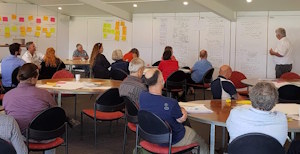
Multi-actor processes bring together people from different organisations, sectors, and communities to work on shared challenges. They are central to place-based initiatives, just transitions, and systems change, where no single actor can “fix” the problem on their own. These approaches are used internationally across climate adaptation, natural resource management, social policy, and community development, offering ways to bring multiple knowledge systems and responsibilities into one shared process.
At their best, these processes offer more than meetings or requests for input. They create spaces where purpose can be clarified, power dynamics acknowledged, and evidence and experience used to shape decisions. This calls for thoughtful attention to relationships, facilitation, and governance, including who is involved, how decisions are made, whose knowledge is recognised, and how people learn and adapt as conditions shift. When well supported, multi-actor processes help groups move from dialogue to coordinated action, producing clearer strategies, stronger partnerships, and more resilient pathways for change.
This LfS hub gathers resources to support this kind of work in practice. It links to guides on partnership design and facilitation, reflections on power and equity, and examples from place-based programmes, systemic design, and just transition processes. It also connects to familiar entry points such as Theory of Change, developmental evaluation, and systemic co-design, which many teams already use to structure shared planning or learning. Together, these materials are intended to help you design and steward multi-actor processes that are inclusive, context-aware, and able to evolve over time.
Explore site resources
The LfS pages and posts below offer practical entry points to help you apply multi-actor thinking in your work:
Facilitating multi-actor processes
This resource page curates guides, toolkits, and frameworks for initiating, facilitating, and managing multi-actor processes. It highlights resources on collaboration, participation, systemic design, power dynamics, and just transitions, providing a strong foundation for inclusive and effective practice.
Cross-sector partnerships and collaborations
Cross-sector partnerships help people and organisations work together on challenges that no single group can resolve on its own. This page gathers resources that support practitioners to design, lead, and sustain collaborations across sectors, drawing on lessons from community initiatives, public sector innovation, and international partnership frameworks. The materials offer practical guidance on shared agendas, governance, trust-building, and long-term impact.
Working with place over time: lessons for long-term, multi-actor practice
This long-form LfS reflection distils eight recurring practice patterns from three decade-long Aotearoa New Zealand programmes and wider international reviews. It shows how collaboration, purpose, learning, relationships, systems and complexity thinking, evidence, institutional settings, and institutional memory interact over time. The post offers a practical lens and guiding questions for people designing, leading, funding, or evaluating long-term, place-based, multi-actor work.
Place-based and landscape approaches
This page focuses on place-based and landscape-scale initiatives, where multi-actor processes are anchored in specific lands, waters, and communities. It brings together guides and reviews on place-based policy, integrated landscape management, and long-term collaboration at catchment and regional scales.
Facilitation guides and processes
This page highlights foundational frameworks, guidebooks, and reflective resources that support the design and facilitation of collaborative processes. These materials help facilitators and teams plan for participation, navigate complexity, and support collective sense-making.
Quick answers to common questions
What are multi-actor processes?
Multi-actor processes are structured ways of working where different groups, such as communities, iwi and hapū, government agencies, NGOs, researchers and businesses, come together around shared challenges. They involve ongoing collaboration, negotiation and learning rather than one-off consultation or information exchange.
How are multi-actor processes different from stakeholder engagement?
Stakeholder engagement often seeks input to a pre-set agenda. Multi-actor processes go further. They share agenda-setting, sense-making, decision-making, and learning across actors, recognising that lasting progress depends on shared ownership, multiple knowledge systems, and joint responsibility for outcomes.
When do multi-actor processes add the most value?
They are especially useful when issues cross boundaries or mandates, when no single organisation can act alone, and when learning and adaptation are essential. This includes catchment and landscape initiatives, just transitions, climate adaptation, urban regeneration, and cross-sector work on wellbeing or equity.
How can I start setting up a multi-actor process?
Begin by clarifying the purpose and boundaries of the work, and by identifying who needs to be involved. Talk with potential partners about expectations, decision-making, and resourcing. Start with small, well-supported conversations that build trust and a shared picture of the system, then expand gradually into structures for planning, action, and reflection together.